PS5 Hall Effect Controller: Which Pads Have Drift-Proof Sticks
A PS5 hall effect controller is a pad that runs on contactless magnetic sticks instead of wear-prone potentiometers. Sony makes no such first-party pad, so you get one of two ways: buy a licensed third-party hall pad like the Nacon Revolution 5 Pro, or swap hall or TMR modules into a DualSense you own.
How to get a ps5 hall effect controller: which licensed pads ship hall or TMR sticks, the DualSense module-swap route, and how to choose one that lasts.
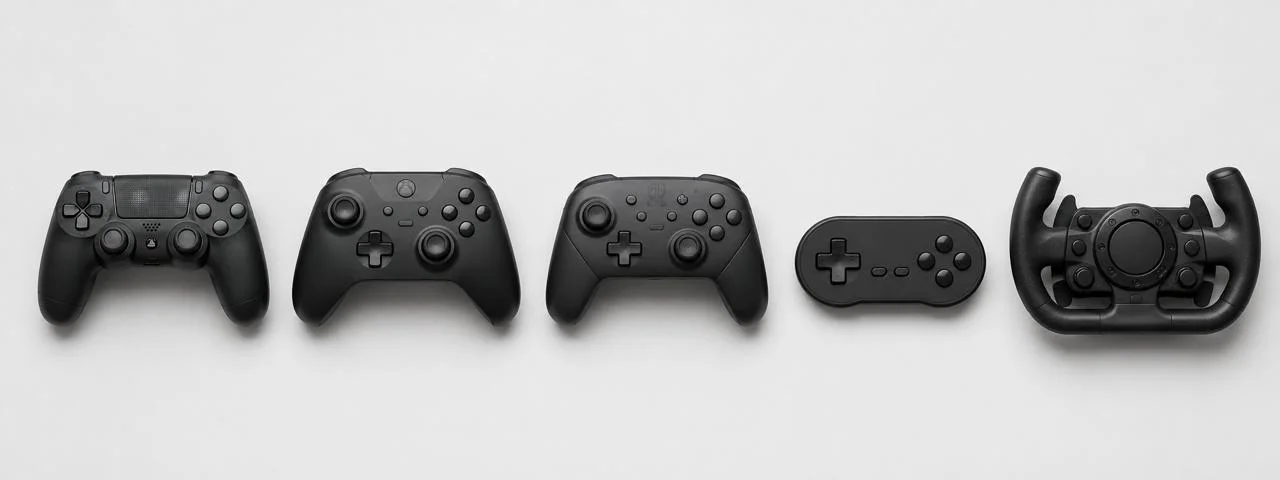
Both routes end the drift for good, but they split sharply on price, effort, and how the pad feels in your hand.
This page is the buying catalog, not the science lesson. If you want to understand how the sensors differ before you spend, the TMR and hall sensor buying guide compares them and explains why magnetic sticks resist drift.
And if your current pad is already wandering, start with the fix first. The PS5 stick drift guide covers recalibration and the full repair ladder before you decide to buy anything new.
Key takeaways
- Sony ships no hall-effect or TMR pad, so a PS5 hall effect controller means going third-party or swapping modules.
- The two main licensed hall pads are the Nacon Revolution 5 Pro and the Victrix Pro BFG Reloaded.
- The DualSense Edge is not magnetic; it uses potentiometers with replaceable modules, which is a faster swap, not a cure.
- Aftermarket hall or TMR modules drop into a DualSense and are usually the cheapest route to a drift-proof stick.
- No browser can read the sensor type, so trust the published spec, then verify a near-zero idle reading after you buy.
◆ VERIFIED
The W3C Gamepad API exposes only normalised axis and button values between -1 and 1, never the physical sensor behind a stick. That means no website, including this one, can tell you whether a pad uses hall, TMR, or potentiometer sticks. What a browser tester can confirm is the result you actually care about: a near-zero idle reading with no at-rest drift.
Source: W3C Gamepad API specification
Skip the reading: how to get hall-effect on a PS5
- Want a ready-to-play pad? Buy a licensed hall controller, the Nacon Revolution 5 Pro or the Victrix Pro BFG Reloaded.
- Already own a DualSense? Swap in aftermarket hall or TMR stick modules, yourself or at a repair shop.
- Want fast future swaps, not magnetic sticks? The DualSense Edge lets you replace worn potentiometer modules in seconds.
- After any route, test your controller now and confirm the sticks rest near zero with no drift.
Does Sony make a hall-effect or TMR PS5 controller?
No, Sony makes no first-party hall-effect or TMR pad. Both the standard DualSense and the premium DualSense Edge use potentiometer sticks, the same contact-based sensor that wears down over time. The Edge headline feature is user-replaceable stick modules, not magnetic sensors.
The clearest proof is the aftermarket itself. A whole category of hall and TMR replacement modules is sold specifically to retrofit the Edge and the DualSense [1].
If Sony already shipped magnetic sticks, that repair market would not exist. So a genuine PS5 hall effect controller always means third-party hardware or a parts swap.
Which PS5 controllers have hall-effect sticks?
Two officially licensed pads carry hall-effect sticks today. The Nacon Revolution 5 Pro uses hall-effect on both the sticks and the triggers with 1000Hz polling, and the Victrix Pro BFG Reloaded uses swappable hall-effect modular sticks and triggers. Both are licensed for PS5, PS4, and PC [2][3].
A third route exists outside the licensed shelf. Boutique builders such as custom-controller shops assemble hall-effect DualSense-style pads to order.
Treat that category with care. Build quality and after-sales support vary a lot between small builders, and a higher price does not guarantee a better stick. None of these is automatically the best; the right pad depends on your budget and how you play.
What does the DualSense Edge actually use, and is it drift-proof?
The DualSense Edge uses potentiometer sticks, exactly like the standard DualSense, so it is not drift-proof. It can develop the same wear-based drift over months of play. Its real advantage is the user-replaceable stick module, not any change in sensor type [4].
That distinction matters for buyers. People often assume the Edge premium price buys magnetic sticks; it does not [5].
What it buys is convenience. When a module wears out you pop in a fresh one, around 20 US dollars, in seconds rather than soldering or buying a whole new pad. That is a faster repair, not a permanent fix for the underlying wear.
Can you put hall-effect or TMR sticks in a DualSense?
Yes, and this is usually the cheapest path to magnetic sticks on a PS5. Aftermarket hall-effect and TMR modules drop into a standard DualSense or a DualSense Edge in place of the original potentiometer sticks. Once fitted, the parts never touch, so the wear-based drift cannot return.
The honest caveat is the install. Most kits need light soldering or use a solderless adapter, so opening the pad is part of the deal [6].
If a soldering iron is not your idea of a good evening, a repair shop will do the swap for a fee. The teardown and module layout are documented well enough that a confident DIYer can manage it at home with care.
Is a hall-effect PS5 controller worth it?
It is worth it when drift has already cost you a pad or you play long daily hours. A contactless hall or TMR stick removes the exact wear path that causes potentiometer drift, so the durability gain is real rather than marketing. For heavy users, that is money well spent.
It is less compelling for light or casual play. A PS5 hall effect controller is an upgrade you feel over years, and a healthy standard DualSense is still a fine pad that often drifts later, not soon.
Do hall-effect PS5 controllers keep the DualSense adaptive triggers and haptics?
Usually not, and this is the trade most buyers underrate. Most third-party PS5 pads, including the licensed hall-effect controllers here, do not fully reproduce the DualSense adaptive triggers and haptic feedback. The hall sticks fix drift, but the immersive feel can change [8].
A few exceptions narrow the gap. Some pads keep Sony’s adaptive triggers yet still drop the haptics, and a rare few built on genuine DualSense internals keep both features intact [8].
So weigh it by what you play. If adaptive triggers and haptics are central to your favourite games, confirm a pad lists them before you buy, because a drift-proof stick does not always come with the full DualSense feel.
How can you tell if a PS5 controller really has hall-effect sticks?
You cannot read the sensor type from a browser, because the W3C Gamepad API never exposes it. A tester sees only normalised stick positions, not whether a magnet or a carbon track produced them. So no website can confirm a hall claim for you, and you should treat any tool that says otherwise with suspicion [7].
What you can do is verify the outcome. Trust the manufacturer’s published sensor spec at purchase, then prove the pad behaves.
Rest both sticks in the controller tester and watch the idle reading. A genuine drift-resistant stick should sit at or very near zero and stay there, with no creep when your thumbs are off it.
Hall-effect vs TMR for a PS5 controller: which should you buy?
For longevity it barely matters, because both are contactless and both resist wear-based drift. Either sensor beats a potentiometer for a pad you want to keep. The choice comes down to feel, precision, deadband, and price rather than which one lasts longer.
In short, TMR is the newer sensor and tends to read finer movement, while hall-effect is more common and often a little cheaper.
That is the headline; the full trade-off deserves its own read. The TMR and hall sensor buying guide compares deadband, precision, and cost in depth so you can match the sensor to how you play.
What is the best way to get a PS5 hall effect controller?
The best route depends on whether you want to open a pad. To buy ready-made, pick a licensed hall pad; to spend less, swap modules into a DualSense you own. The table below lays out the realistic options, with prices given as rough ballparks rather than exact quotes.
| Option | Sensor | Roughly costs | Drift-proof? | How to get it |
|---|---|---|---|---|
| Nacon Revolution 5 Pro | Hall-effect sticks and triggers | Premium licensed pad | Yes, contactless | Buy licensed, ready to play |
| Victrix Pro BFG Reloaded | Hall-effect modular sticks | Premium licensed pad | Yes, contactless | Buy licensed, swap modules |
| Boutique custom hall pad | Hall-effect sticks | Varies widely | Yes, if built well | Order from a custom builder |
| Aftermarket module swap | Hall or TMR drop-in | Around 20 to 30 dollars plus install | Yes, contactless | Fit yourself or use a shop |
| DualSense Edge | Potentiometer, replaceable | Around 200, modules around 20 | No, faster swap only | Buy, replace worn modules |
The question I get most is whether a browser can spot a fake hall pad, and it cannot; the Gamepad API simply does not carry that data. What building JoyCheck taught me is to stop chasing the label and verify the behaviour instead. Buy on the published spec, then rest the sticks and watch the idle number sit at zero.
Taimoor Bamazai, founder, Elites Algorithm Limited
Sources and references
- DualSense Edge stick module (PlayStation Direct): the replaceable potentiometer module that the aftermarket hall and TMR mods replace.
- Nacon Revolution 5 Pro: licensed PS5 pad with hall-effect sticks and triggers at 1000Hz polling.
- Victrix Pro BFG Reloaded: licensed PS5 pad with swappable hall-effect modular sticks and triggers.
- DualSense Edge wireless controller (PlayStation): Sony’s premium pad with replaceable stick modules, not magnetic sensors.
- iFixit DualSense device page: teardowns showing the potentiometer stick module used across DualSense pads.
- iFixit DualSense device page: the stick assembly and what a module replacement involves.
- W3C Gamepad API specification: the spec exposes normalised axes only, never the physical sensor type.
- The best PS5 controllers (IGN): notes which third-party pads include or skip Sony’s adaptive triggers and haptic feedback.
Does Sony make a hall-effect or TMR PS5 controller?
No. Sony ships no first-party hall-effect or TMR pad. The standard DualSense and the DualSense Edge both use potentiometer sticks. The Edge feature is user-replaceable stick modules, not magnetic sensors, which is why a large aftermarket of hall and TMR replacement modules exists specifically for it.
Which PS5 controllers have hall-effect sticks?
The two main officially licensed PS5 pads with hall-effect sticks are the Nacon Revolution 5 Pro and the Victrix Pro BFG Reloaded. Boutique custom builders also assemble hall-effect DualSense-style pads. Quality and value vary widely between these, so verify each pad after you buy.
What does the DualSense Edge actually use, and is it drift-proof?
The DualSense Edge uses potentiometer sticks, the same wear-prone contact sensor as the standard DualSense. It is not drift-proof. Its real benefit is that the stick modules are user-replaceable for around 20 US dollars, so a worn stick is a fast swap rather than a new controller.
Can you put hall-effect or TMR sticks in a DualSense?
Yes. Aftermarket hall-effect and TMR modules drop into a standard DualSense or a DualSense Edge in place of the potentiometer sticks. Most need light soldering or a solderless adapter, so a repair shop is a sensible route if you would rather not open the pad yourself.
Is a hall-effect PS5 controller worth it?
It depends on how you play. If you log long daily hours and have already replaced a drifting pad, a contactless hall or TMR stick removes the wear path that caused the drift, which justifies the cost. For a casual player on a healthy pad, a standard DualSense is still fine.
How can you tell if a PS5 controller really has hall-effect sticks?
You cannot read the sensor type from a browser, because the W3C Gamepad API does not expose it. Trust the maker's published spec for the sensor, then verify the result you care about: rest the sticks in a browser tester and confirm a near-zero idle reading with no at-rest drift.
Hall-effect vs TMR for a PS5 controller: which should you buy?
Both are contactless and both resist wear-based drift, so either beats a potentiometer for longevity. TMR is the newer sensor and tends to read finer movement, while hall-effect is more common and often cheaper. The deeper trade-off is covered in the dedicated sensor buying guide.
What is the cheapest way to get hall-effect on a PS5?
The cheapest route is usually swapping aftermarket hall or TMR modules into a DualSense you already own, often around 20 to 30 dollars in parts plus a shop fee or your own soldering. A new licensed hall pad costs more but arrives ready to play with no opening required.
Test your PS5 controller in the browser
No install, no account. Your inputs never leave your device.